
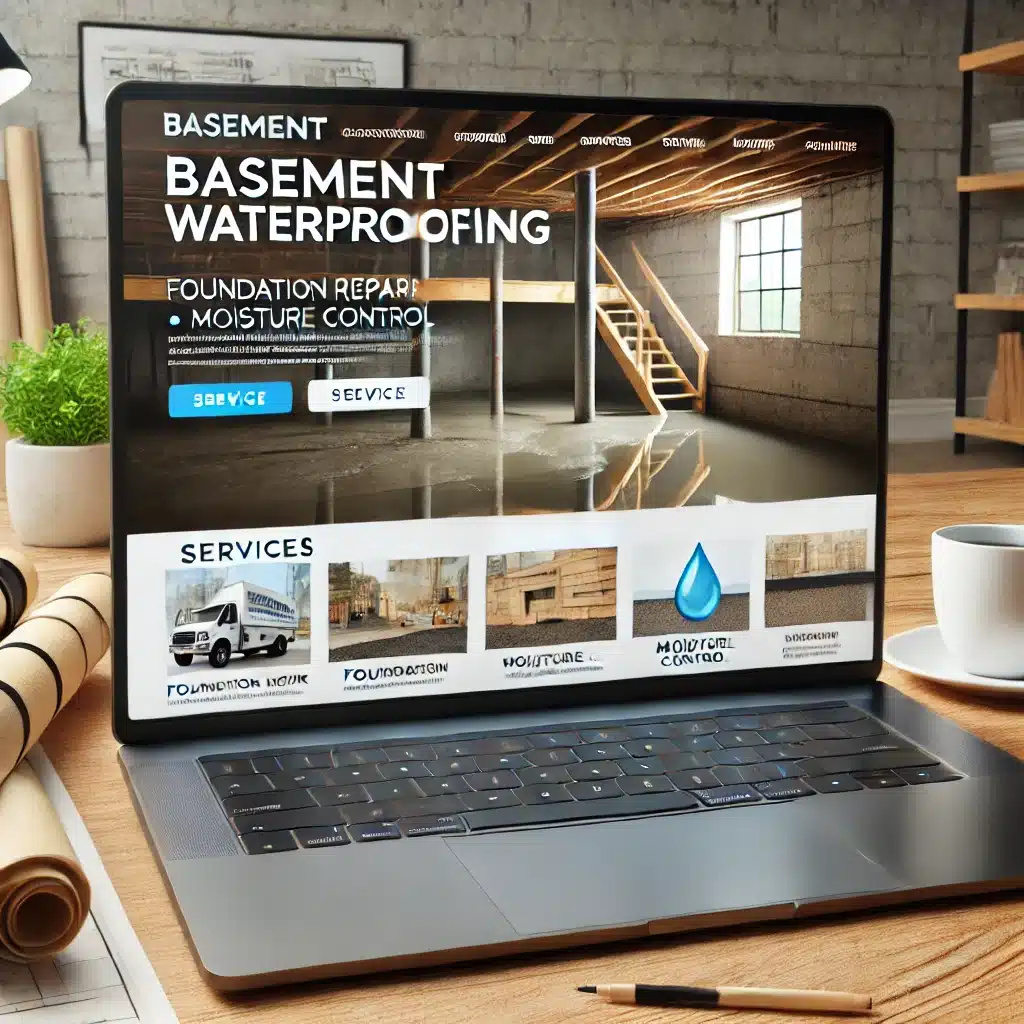
Imagine this: your website is a well-oiled machine, smoothly guiding potential customers from the moment they land on your homepage to the final click that seals the deal for your basement waterproofing services.
But is it really performing as well as it could be? You’re about to embark on a journey that explores the nuances of conversion optimization for your business website.
We’ll delve into user experience enhancements, compelling content creation, SEO strategies, and tracking improvements for conversion rates.
Stick around if you’re keen to transform your website into a revenue-generating powerhouse.
Key Takeaways
- Prioritize user experience by focusing on user-friendly interface and fast site load speed.
- Create compelling content that addresses target audience pain points and includes strong calls to action.
- Implement SEO strategies like keyword optimization, local SEO, and link-building for better visibility.
- Track and improve conversion rates by monitoring key metrics, optimizing landing pages, and enhancing user engagement.
Understanding Website Conversion Basics
To optimize your basement waterproofing website for conversions, you need to first grasp the fundamentals of website conversion. It’s not just about getting traffic; it’s about attracting the right kind of traffic. Your website needs to act as a funnel, guiding visitors towards a specific action, whether that’s requesting a quote, booking an appointment, or buying a product.
You’ll also need to understand the different stages of the buyer’s journey. The awareness stage is when a potential customer first realizes they’ve a problem, in this case, a wet basement. The consideration stage is when they start to research potential solutions and the decision stage is when they’re ready to make a purchase.
To capture these customers at every stage, your website needs to be optimized for search engines. This includes using relevant keywords, providing valuable content and ensuring your site is easy to navigate. You also need to make sure your site is mobile-friendly, as more and more people are searching for services on their phones.
Understanding these basics is the first step in optimizing your basement waterproofing website for conversions. By doing so, you’re setting yourself up for success in the competitive online market.
Enhancing User Experience for Conversion
Having a solid understanding of website conversion basics, you’re now ready to enhance your website’s user experience, a critical factor in boosting conversion rates. The key is to understand that a user-friendly, intuitive interface can make the difference between a potential customer staying on your site or bouncing off.
Start by simplifying your website’s navigation. Make it easy for users to find what they’re looking for. If they’re looking for basement waterproofing services, direct them swiftly and easily. A hard-to-navigate website can frustrate users, pushing them away.
Secondly, improve your site’s load speed. A slow site can kill conversions. Research shows that a one-second delay in page load time can lead to a 7% loss in conversions. Implement strategies like compressing images and minimizing JavaScript to enhance load speed.
Lastly, use clear, compelling call-to-action (CTA) buttons. Ambiguous or hard-to-find CTAs can result in lost conversions. Make sure your CTAs stand out and clearly communicate what action you want users to take.
Creating Compelling Content That Converts
Crafting persuasive, SEO-optimized content for your basement waterproofing website is a game-changer, capable of turning casual visitors into committed customers. It’s not just about flooding your site with keywords. You need to create content that provides value, solves problems, and persuades the reader to take action.
Firstly, identify your target audience’s pain points. What’re their concerns about basement waterproofing? Use these insights to shape your content. Your blog posts, service descriptions, and FAQs should address these issues directly, offering solutions and demonstrating your expertise.
Next, ensure your content is easy to find and understand. Use SEO strategies like keyword optimization, but don’t forget readability. Break up text with subheadings, bullet points, and images to make it digestible.
Lastly, include strong calls to action (CTAs). These are the bridges that lead visitors from reading your content to contacting you for service. CTAs should be compelling, clear, and provide a sense of urgency.
SEO Strategies to Boost Visibility
Now, let’s dive into SEO strategies that can catapult your basement waterproofing website’s visibility in search engine results, driving more potential customers your way.
First, focus on keyword optimization. Identify the most relevant keywords that your potential customers are using to search for basement waterproofing services. Incorporate these keywords naturally into your website content, title tags, meta descriptions, and URLs.
Next, prioritize local SEO. Since your business caters to a specific geographical area, make sure your website is optimized for local searches. Include your business address, local phone number, and customer reviews to boost your visibility in local search results.
Don’t forget about link-building. This strategy involves getting other reputable websites to link back to yours, enhancing your site’s credibility in the eyes of search engines.
Finally, ensure your site is mobile-friendly. With the rise of mobile searches, search engines favor websites that are responsive and easy to navigate on mobile devices.
These are just the basics. SEO is a continuous process of testing, analyzing, and refining. Keep up-to-date with SEO trends and best practices to stay ahead of the competition. Remember, the goal isn’t just visibility, but conversions.
Tracking and Improving Conversion Rates
Regularly tracking and improving your conversion rates is crucial for the success of your basement waterproofing website, as it directly impacts your SEO performance and overall business growth. You need to understand where your site is performing well, and where improvements can be made.
Here’s a simple table to help you understand key points:
Key Metrics | Actions |
Bounce Rate | Reduce by improving content relevance |
Pages per Session | Increase by adding more valuable content |
Conversion Rate | Improve by optimizing landing page |
Average Session Duration | Increase by boosting user engagement |
These metrics will help you gain insights into your site’s performance. For instance, a high bounce rate could indicate irrelevant content, while a low conversion rate may suggest issues with your landing page. By continuously monitoring these metrics, you can identify the areas that need enhancements and act accordingly.
Frequently Asked Questions
What Are Some Common Mistakes to Avoid When Designing a Basement Waterproofing Website?
You’ll want to avoid several common mistakes when designing a basement waterproofing website. Don’t neglect SEO; it’s vital for drawing in potential customers.
Also, ensure your site has a clear call-to-action; don’t hide it.
Keep your content concise and engaging; don’t overload visitors with too much text.
Lastly, don’t overlook mobile optimization; many customers will access your site via mobile devices.
Avoid these pitfalls to maximize your site’s conversion potential.
How Can I Make My Basement Waterproofing Website More Appealing to Potential Clients?
To make your basement waterproofing website more appealing, you’ve got to understand your audience. Statistics show 80% of customers research companies online before hiring. Therefore, focus on SEO to improve your site’s visibility.
Include informative, easy-to-understand content that showcases your expertise. Don’t forget to add clear call-to-actions and make sure your site’s mobile-friendly. User experience is key, so ensure fast load times and simple navigation.
How Can I Use Social Media to Drive Traffic to My Basement Waterproofing Website?
You can use social media to drive traffic to your basement waterproofing website by creating engaging content that highlights the importance of waterproofing. Share before-and-after photos, customer testimonials, and useful tips.
Use hashtags relevant to home improvement and waterproofing to increase your visibility. Don’t forget to link back to your website in your posts and profile.
Lastly, run targeted ads to reach potential clients in your area.
Is There Any Specific Software or Tools Recommended for Building and Maintaining a Basement Waterproofing Website?
Yes, there are several tools you’d find useful. WordPress is a great platform for building your site, offering SEO-friendly features. Use Yoast SEO for optimizing content and Google Analytics for tracking visitors.
For conversions, consider Leadpages for creating landing pages, and a tool like MailChimp for email marketing.
Can I Integrate an Online Appointment Booking Feature on My Basement Waterproofing Website and How Would It Affect the Conversion Rates?
Absolutely, you can integrate an online booking feature on your site. In fact, it’s a smart move. Statistics show that businesses with online booking systems see a 13.5% increase in appointments.
It’ll make your site more user-friendly and increase your conversion rates. It’s an extra convenience for your customers, allowing them to book your services anytime, anywhere. Also, it streamlines your workflow, making your business more efficient.
Conclusion
In a nutshell, your basement waterproofing website is more than just an online brochure. It’s your golden ticket to conversions. By enhancing user experience, crafting compelling content, refining SEO strategies, and diligently tracking improvements, you can turn your site into a robust sales engine.
So, roll up your sleeves and optimize your website to let those conversion rates rain down!

I’m Bill Crawford, Owner of Rainmaker For Contractors. RFC began as a passion after owning a Home Improvement Franchise in the Chicagoland area for 15 years. I’ve taken what I’ve learned from being an owner used what has worked – And thrown out what has not. As a result, I’ve created an internet marketing agency focused on helping contractors grow their businesses. An important factor in Rainmaker For Contractor’s current success is predicated on my experience training over 650 employees and setting up and monitoring over 500 waterproofing trade shows.